
Start here: one fixture or the whole house?
Run the cold tap at the weak fixture, then at a tap on a different floor. Then compare hot against cold. The pattern you see removes most of the guesswork before you touch a tool.
| What you notice | Likely cause | Next step |
|---|---|---|
| One faucet is weak, others fine | Clogged aerator or cartridge | Clean the aerator, check the cartridge |
| Hot is weak, cold is fine | Water heater valve or sediment | Check the heater shutoff and ask a plumber |
| Cold weak at every tap | Main valve, regulator, service line or leak | Check the main valve, then call |
| Sudden change overnight | Valve closed or a leak | Check the meter for movement |
| Slow decline over months | Mineral buildup or aging pipe | Aerators first, then plumber assessment |
| Only at the shower | Showerhead or mixing valve | Soak the head, then check the cartridge |
What you need
A small bucket, white vinegar, an old toothbrush and a pair of pliers wrapped in a rag cover the fixture checks. A cheap screw-on pressure gauge that attaches to an outdoor hose bib is a worthwhile tool, and a whole-house test takes under five minutes.
Close any hot water use first, since a gauge reads best with everything off. Write down the reading. Then run a faucet and watch whether the reading falls hard. A big drop when water runs points toward restriction, not low static pressure.
Step by step: checks you can do yourself
- Clean the aerator. Unscrew it from the spout, rinse out grit, soak in vinegar for an hour and brush the screen. This fixes more weak faucets than any other step.
- Check the showerhead. Unscrew it and soak the same way. Look for white scale in the small holes.
- Open the fixture stop. The oval handle under a sink or behind a toilet may be partly closed. Turn it counterclockwise until it stops. Do not force it.
- Check the main valve. Make sure the house shutoff is fully open. A ball valve sits in line with the pipe when open. A gate valve should be turned fully counterclockwise.
- Run the gauge test. Attach it to an outdoor hose bib, turn it on, and note the reading with all other water off.
- Watch the meter. With every fixture off, the meter should stand still. If it moves, you may have a leak using up your flow.
Leave the pressure regulator alone. It is a sealed, spring-loaded valve, and adjusting it without a gauge can push pressure higher than your fixtures and water heater can take.
The pressure regulator: have it checked
Many homes have a pressure reducing valve on the main, a bell-shaped brass fitting near the shutoff. It protects fixtures from high incoming pressure, and it wears out over time. A failing one can leave you with weak flow, or with pressure that spikes and rattles pipes.
We do not state a target number here because settings depend on the fixtures and the house. A plumber can test it, adjust it or replace it. This is a good time to also check the shutoff valve, since the two often get swapped together.
Hidden leaks and the service line
If the meter moves with every tap off, water is escaping before it reaches your fixtures. That pulls pressure down at the far end of the house, and the leak may be inside a wall, under a slab, or in the buried line between the meter and the house. Our guide to leak detection explains how a plumber pins it down without tearing up floors.
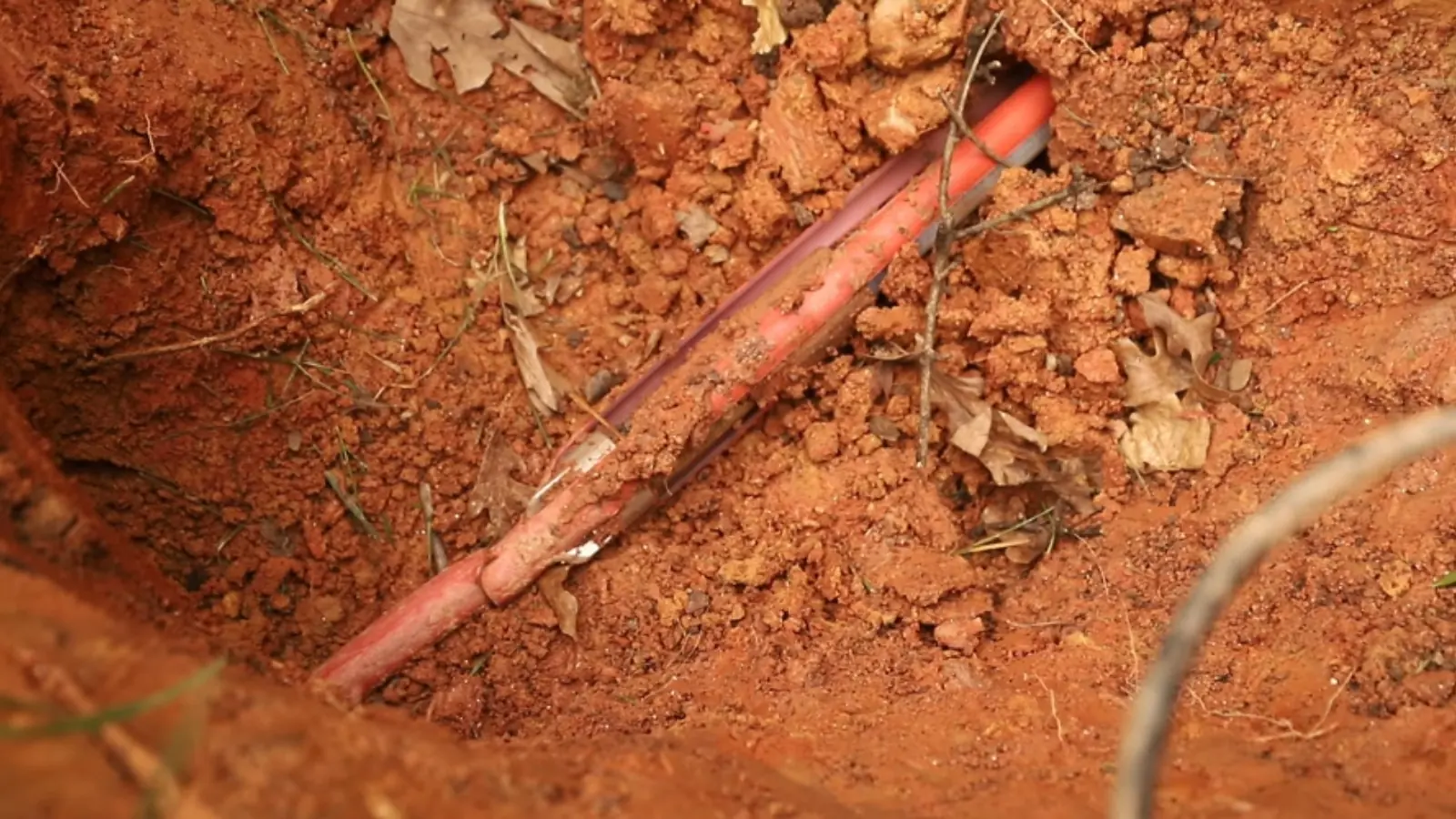
A corroded or partly collapsed service line can also strangle flow all at once. The tell is steady weak pressure at every tap, even with the regulator and valves clear. Repair or replacement of that buried section is a water service line repair job, and it is not a DIY one. Call 811 before anyone digs.
Stop and call
Call the 24/7 line if the meter moves with everything off, if pressure falls to a trickle at every tap, if water appears in the yard, or if a wall or ceiling is damp. Close the main valve if water is actively escaping.
Do not open the meter-side valve. That belongs to the water utility.
Common mistakes
- Replacing a faucet when the aerator was the clog.
- Turning the regulator screw without a gauge.
- Leaving the main valve half open after a repair.
- Blaming the utility before checking inside the house.
- Using a pipe wrench on a chrome aerator and scratching it.
- Ignoring a meter that moves with everything off.
What to expect from a pressure visit
A plumber starts with a gauge on a hose bib and a look at the main, the regulator and the meter. Then the plumber checks hot and cold at several fixtures, and runs a pressure drop test. If the fixture is the problem, a repair such as a new cartridge or valve is straightforward. See faucet repair for those fixes.
Cost depends on where the restriction is, how easy it is to reach, whether a part must be replaced, and the time of the call. We state a clear price before work starts. Same-day appointments are available when the schedule allows.
Pressure in Mill Creek homes
Homes in the original plat, built from 1976 through the early 1980s, often have supply lines and valves that are now forty years old. Mineral scale and aging stops are the usual reasons for slow flow there, and some homes of that era have polybutylene, so ask a plumber to identify the pipe.
Newer areas such as the Town Center and The Farm at Mill Creek have newer plumbing but the same aerators. For anything about the street supply or the meter, ask your water utility. We also dispatch to nearby towns, including Bothell.
Low water pressure questions
Why is my water pressure low at just one faucet?
Usually a clogged aerator or a worn cartridge. Unscrew the aerator, soak it in vinegar and rinse. If the flow is still weak, the cartridge or stop valve is next.
Why is my water pressure low in the whole house?
Check the main valve first, then the regulator and the meter. A moving meter with everything off means a leak. If all of those are fine, the service line or the supply from the street may be the cause, and your water utility can tell you about the street side.
Can I adjust the pressure regulator myself?
We advise against it. Without a gauge you cannot see what the change does, and too much pressure can damage fixtures and the water heater.
Can low pressure be a sign of a leak?
Yes. A leak steals flow before it reaches the fixtures. The meter test with all water off shows it quickly.
Who should I call about low water pressure in Mill Creek?
If it is one fixture, you may fix it yourself, or call for faucet repair. If the whole house is affected, call the 24/7 line and tell us what the gauge and meter showed.