
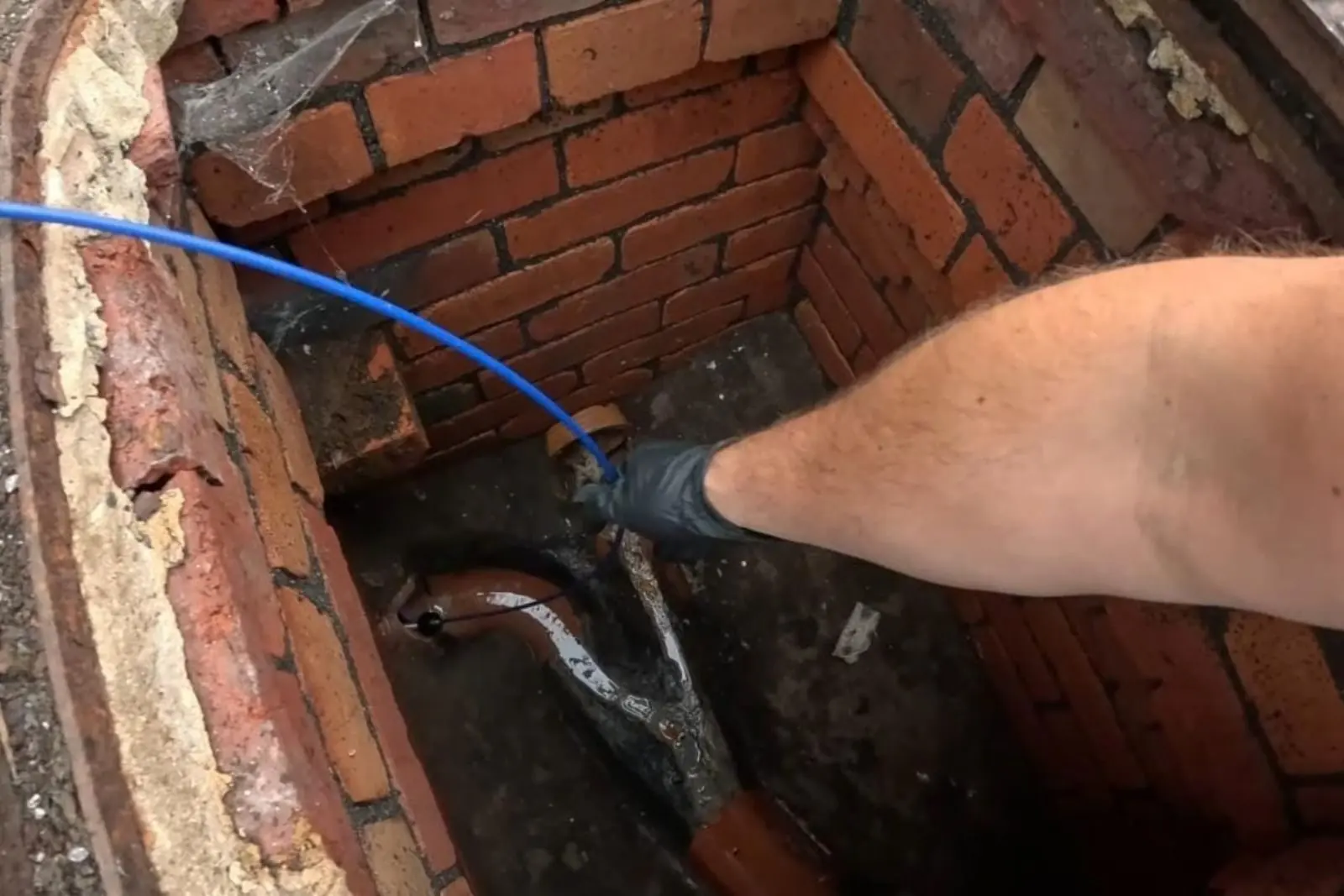
Sewer backup: what to do first
A sewer backup is the moment the house stops being able to send water out. The lowest fixture overflows first, which is usually a basement shower, a floor drain or a ground-floor tub. The first minutes matter because every extra flush or load of laundry adds to the overflow.
Stop using water.
No flushing, laundry, dishwasher or showers. Ask everyone in the house, including anyone upstairs, to stop.
Stay out of the water.
Backed-up sewage carries bacteria. Keep children and pets away, wear boots and gloves if you must walk through it, and wash well afterward.
Mind the electrics.
If water is near outlets, a panel or an appliance, do not touch them. Turn off power only if the breaker panel is dry and you can reach it safely.
Call and describe it.
Tell the 24/7 line which fixtures are affected and whether anything is overflowing. Photos help your insurer later.
Do not try to push the clog with a plunger once sewage is rising. Plunging can force contaminated water back out of other openings. Wait for the cable machine, which pulls the blockage out rather than pushing it deeper.
Signs the main line is plugged
A main-line blockage shows up in many fixtures at once. Several toilets will not flush or flush weakly, a tub fills when the washer drains, or a basement drain bubbles when someone upstairs runs the shower. A toilet that gurgles after a flush is an early warning, usually weeks before the full stoppage.
One slow sink alone is usually local to that sink. If you want that kind of job, our drain cleaning page covers it. When two or three unrelated fixtures react together, the blockage is on the shared line and the main cleanout is the access point.
Where the cleanout is and why it matters
A cleanout is a capped pipe, usually three or four inches across, that gives direct access to the sewer line. Many homes have one near the foundation, often in a side yard, beside the garage or in a basement or crawlspace. Some have one just inside the property near the street.
Look for a round or square cap at ground level, often green, black or white plastic, or a metal plug on older iron lines. Do not unscrew it if water is standing in the pipe, since a full line can spill the moment the cap loosens. Show the technician where it is instead.
No cleanout is not the end of the story. We can often reach the line through a pulled toilet or a vent. Adding a cleanout is a worthwhile fix on its own, since every future cleaning gets easier.
How we clear the mainline
We feed a heavy drum cable machine through the cleanout toward the street. The cutting head spins through roots and grease or grabs an object, and the cable's feel tells us where it meets resistance. We note the distance in feet so the camera can find the spot later.
- Confirm the cleanout and flow. We check which fixtures are blocked and where water is standing.
- Cable the line. A cutting head clears roots, grease and soft buildup. A retrieving head pulls out solid items.
- Camera the pipe. We look for cracks, offsets, sags and where the roots entered, rather than assuming the line is fine.
- Test the flow. Water is run through the fixtures to confirm they drain. Then we explain what the camera showed and what comes next.
If the cable stalls in the same place or the camera shows heavy buildup coating the wall, hydro jetting may follow. It cleans the full pipe wall, though it is not right for every pipe condition.
Why Mill Creek mainlines clog
The original plat east of SR 527 was built from 1976, with most first-phase homes finished by about 1983. Their sewer laterals are now over forty years old. Older cast iron and early plastic joints loosen and roughen with age, and mature trees on neighbourhood lots send roots toward every wet seam.
If your home is in that part of town and the line has clogged more than once, ask about a camera look. Roots in the main are a reasonable thing to check, and knowing the answer decides whether you keep cleaning every year or budget for a repair.
Newer parts of Mill Creek, such as the Town Center area built from the 2000s and The Farm at Mill Creek, approved in 2019, have newer pipe. Blockages there are more often wipes, grease or construction debris than roots.
After-hours emergency cleanout
Sewer backups do not keep business hours. The washer finishes a load at nine in the evening, a guest takes a long shower on Sunday, and the main finally gives up. The 24/7 line is built for this, and an emergency cleanout means we focus first on restoring flow.
Same-day appointments are available when the schedule allows, and after-hours calls are scheduled by urgency. We cannot promise an exact arrival time. The dispatcher will tell you what to do while you wait and confirm the address by text if you ask.
Cleaning options compared
| Method | Best when | Trade-off |
|---|---|---|
| Cable machine through the cleanout | A sudden main blockage, roots or soft buildup | Opens a channel and leaves the wall coating behind |
| Camera after cleaning | Any backup that may return | Adds time, shows the cause |
| Hydro jetting | Repeat clogs, grease or scale in a sound pipe | Camera first, because it suits only some pipe conditions |
| Adding a cleanout | No access, or a hard-to-reach line | A small repair that makes every future visit easier |
| Sewer line repair | Camera shows a break, sag or collapse | Higher cost, ends the repeat clog |
What decides the price of sewer line cleaning
What moves the price of clearing the main
You get a clear price before work starts. The same few factors shape every sewer cleaning quote.
Routine line cleaning is rarely covered. Sudden backup damage inside the home may be covered under some policies, while slow root damage often is not, so read your policy or ask your insurer.
Before we arrive
- Find the cleanout and clear leaves, soil or stored items from around it.
- Note when each fixture started acting up and in what order.
- Take photos of any overflow for your insurer.
- Tell us if the line has been cabled before and how far the cable went.
- Keep the driveway clear if the cleanout is outside.
If the camera finds a damaged pipe, our sewer line repair page describes the options. We serve Mill Creek and nearby towns, including Bothell.
Sewer line cleaning questions
How is sewer line cleaning priced?
You get a clear price before work starts. It depends on access, the length of the run, what is blocking it, whether a camera or jetting is added, and the time of the call.
Describe the symptoms and where the cleanout is, and the dispatcher can explain what applies.
Do you handle sewer line cleaning emergencies at night or on weekends in Mill Creek?
Yes. The 24/7 line is open at every hour and a plugged main with sewage rising is treated as urgent. Tell the dispatcher which fixtures are overflowing.
We cannot promise an exact arrival time, but same-day appointments are available when the schedule allows.
Can you clear a main line if there is no cleanout?
Usually, yes. We can often reach the line by pulling a toilet or through a roof or wall vent. It is harder and takes longer than using a cleanout.
We may recommend installing a cleanout after the blockage is cleared, which makes future work simpler.
The cable hit a stop. What does that mean?
It can be roots, a lodged object, a heavy buildup or a damaged section of pipe. The cable tells us something is there but not what it is.
A camera answers the question. If the pipe is broken, cleaning will not hold and a repair is the real answer.
Will the clog come back?
It may. If the pipe is intact, the clog can be cleared and may stay away for a long time. If roots or a damaged section caused it, it is likely to return.
We cannot promise it will not. The camera helps us tell you which case you are in.
Can you clear a sewer line that goes to a septic tank?
We can clear the line between the house and the tank. We do not pump septic tanks. If your line runs to a tank, tell the dispatcher so the right plan is made.
I own a rental. Can I authorize a sewer cleaning for a tenant?
Yes. Give the dispatcher the address, your authorization and the tenant contact. We coordinate access and can share what the camera shows for your records.
What if the sewer backs up into my basement before you arrive?
Stay out of the water, keep electrics dry and keep using no water. Take photos for your insurer. Cleanup is separate from clearing the line, and a restoration company usually handles it.
We will clear the line and tell you what the camera showed.