
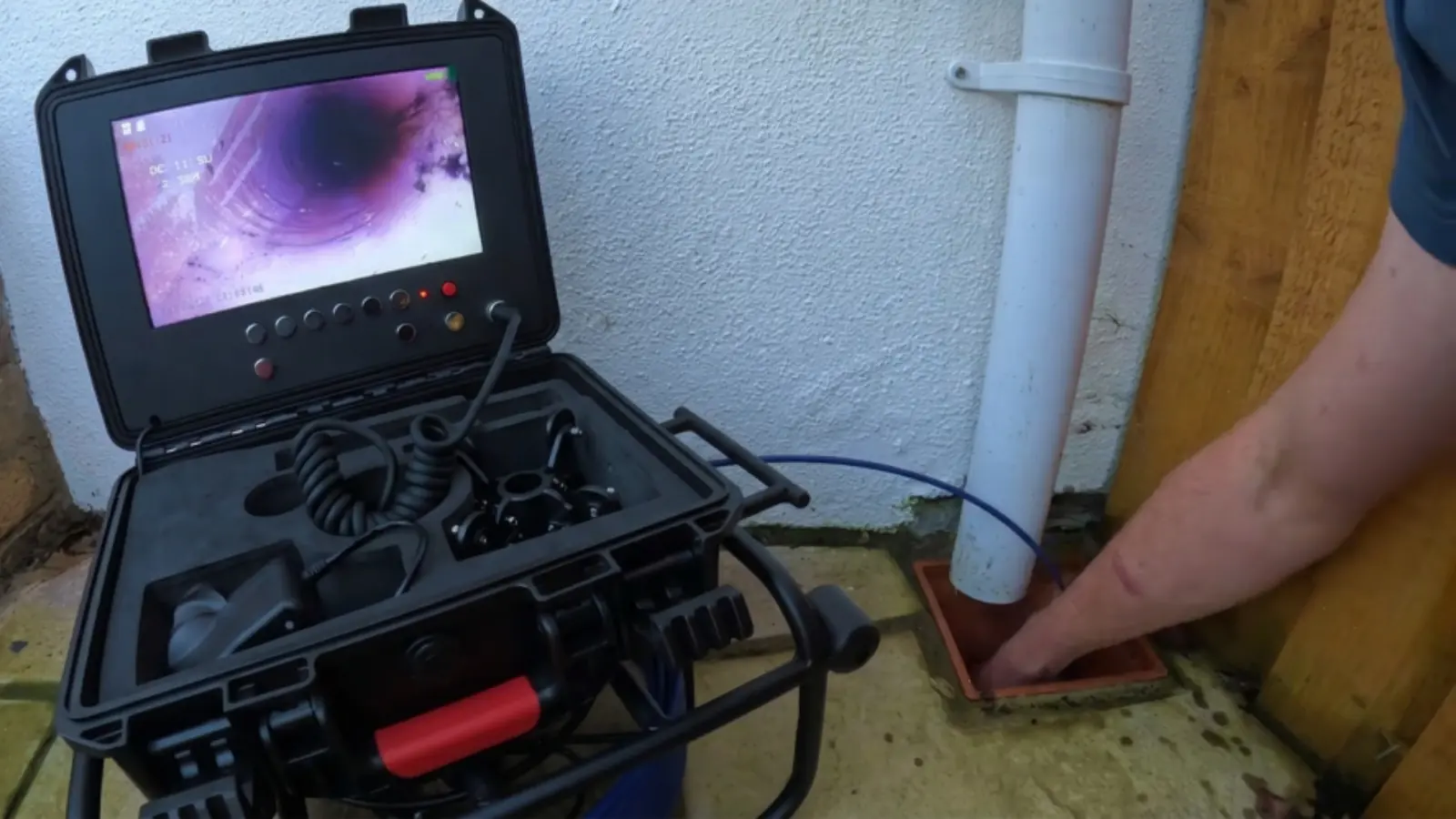
When a camera inspection is worth it
A camera replaces guessing. It is worth the visit in a few specific situations, and each has a different question behind it.
- Recurring clogs. If the same line clogs twice in a year, the camera shows whether it is roots, grease, a sag or a break.
- A sewer smell. Odor with no visible clog can come from a cracked pipe, a dry trap or sludge in the line.
- Buying a house. A buyer under contract can see the pipe before closing, which is easier to negotiate than a repair afterward.
- A remodel. Contractors often need to know where a drain line runs before cutting a floor or adding a bathroom.
If none of those apply and the drains are running fine, you do not need a camera. Do not pay for an inspection out of habit.
What the camera shows
A sewer camera shows a lot. Roots entering at a joint look like pale hair or a thick mass. A crack appears as a dark line along the pipe wall, an offset joint as a step where two pipes no longer line up, and a sag as a pool of water sitting in a low spot.
The camera also shows the pipe material and the condition of the surface. Cast iron is rough and often scaled, plastic is smooth, and clay is segmented. Homes from the late 1970s and 1980s, like those in the original plat east of SR 527, often have cast iron or ABS, so a camera is the only way to see how those forty-year-old pipes have held up.
Many cameras have a transmitter that lets us find the exact spot above ground, which matters if a repair is needed. That part is covered in the section on locating a line below.
What the camera cannot see
A camera is a good tool with real limits. It sees only the pipe it can travel through, so a full blockage, a collapsed section or a sharp bend can stop it. It cannot see behind the pipe wall, so it cannot tell how much soil has washed out around a crack.
It also cannot judge a pipe it cannot reach. If there is no cleanout, access may be through a pulled toilet or a vent. Some lines are too small or too twisted for a camera, and a visit may end with a partial look. We say so in plain words rather than guess.
A clean camera run on the day also does not predict the future. Roots can enter next year, and a pipe in good shape now can shift later. The picture is a snapshot.
What you get from the visit
You get a technician who watches the live picture and explains what is on the screen: where the roots are, how far from the cleanout, what the pipe is made of and what we would do about it. That conversation is the main product, and it is most useful when you ask questions during the run.
Whether a recording or a written report is provided depends on the visit and the equipment. Ask the dispatcher what documentation applies when you book. We do not promise a report, so if you need paperwork for a purchase, a landlord or an insurer, say so on the call before the visit.
If the camera finds damage, the next step is covered on our sewer line repair page. If it finds buildup or roots in a sound pipe, hydro jetting or a cable cleaning may be enough.
Buying a house: camera before closing
Buyers often ask for a camera inspection during the contract period. It shows the lateral sewer line, which a standard home inspection cannot see. Roots, a sag or a cracked joint found before closing give you room to negotiate or to walk away.
Tell the dispatcher your timeline and the address. Same-day appointments are available when the schedule allows, but we cannot promise a time. If the seller has to give access, arrange that before the visit so the cleanout is reachable.
A wall or sewer line that looks fine on camera still does not guarantee the rest of the plumbing. For hidden water, see our leak detection page.
Locating a line during a remodel
If you are adding a bathroom, moving a wall or pouring a slab, knowing where the drain runs saves money. The camera carries a transmitter, and a handheld locator above ground picks up the signal and marks the position and rough depth.
That mark helps a contractor avoid cutting into the line, and it helps us plan a repair. Tell us why you want the line located, since a remodel needs different information from a clog.
Why Mill Creek lines are worth a look
Mature evergreen and broadleaf trees on many lots in the older subdivisions make root intrusion a reasonable thing to check. If your home dates from the late 1970s or 1980s and has never been scoped, a camera can tell you whether the lateral is fine or at risk.
Newer areas such as Town Center, built from the 2000s, and The Farm at Mill Creek, approved in 2019, have newer plastic pipe. A camera there is less often needed, unless there is a clog, a smell or a purchase.
Inspection options compared
| Tool | Best when | Trade-off |
|---|---|---|
| Sewer camera inspection | Recurring clogs, odor, a purchase or a repair plan | Cannot pass a full blockage or a collapsed section |
| Camera with locator | A remodel or a repair that needs the line mapped | Depth readings are approximate |
| Cable cleaning first, camera after | A line too blocked for a camera to enter | Adds a step before the picture |
| Smoke or dye testing | Tracing an odor with no clear source | Does not show pipe condition |
| No inspection | Drains that run fine and no purchase or remodel | You will not know the pipe condition |
What decides the price of a sewer inspection
What moves the price of a camera visit
You get a clear price before work starts. These are the factors that shape it.
Insurance generally does not cover a routine inspection. If a covered event such as sudden backup damage led to the visit, ask your insurer what they need.
Before we arrive
- Find and clear the cleanout, or tell us where drains are reachable.
- Note any recurring clog, smell or past repair.
- If buying, share your closing timeline and who controls access.
- Ask what documentation applies if you need something on paper.
- Keep pets inside and away from the work area.
We serve Mill Creek and nearby towns, including Bothell. A blocked line may need sewer line cleaning before a camera can run.
Sewer inspection questions
How is a sewer inspection priced?
You get a clear price before work starts. It depends on access, the length of the line, whether cleaning is needed first, whether the line must be located above ground, and the time of the visit.
The dispatcher can explain the structure when you call.
Will I get a recording or a report?
It depends on the visit and the equipment, so ask the dispatcher what documentation applies when you book. We do not promise a report.
If you need paperwork for a purchase, a landlord or an insurer, say so on the call before the visit.
Can the camera find every problem?
No. It sees only the pipe it can travel through. A full blockage, a collapsed section or a tight bend can stop it, and it cannot see soil washout behind the pipe wall.
A clean run today also does not predict future root growth.
I am buying a home. Is a camera inspection worth it?
Often yes, especially for a house built in the late 1970s or 1980s with a lateral that has never been scoped. It shows cracks, roots and sags that a standard home inspection cannot see.
Share your timeline and who controls access when you call.
Can you tell me where my sewer line runs?
Usually. The camera carries a transmitter and a handheld locator marks the position and approximate depth above ground. This helps with remodels and with planning a repair.
Depth readings are approximate, and we say so.
Can a camera run through a blocked line?
Not through a full blockage. If the line is blocked, it may need cabling first. See our drain cleaning page for what that involves.
After the line is open, the camera can run and show why it blocked.
I own a rental. Can I authorize an inspection for a tenant property?
Yes. Give the dispatcher the address, your authorization and the tenant contact. We coordinate access with them.
Is the sewer smell in my bathroom a pipe problem?
It can be, but a dry trap in a rarely used fixture is a common cause. Run water in the fixture for a minute first. If the smell continues, a camera look is a reasonable next step.