
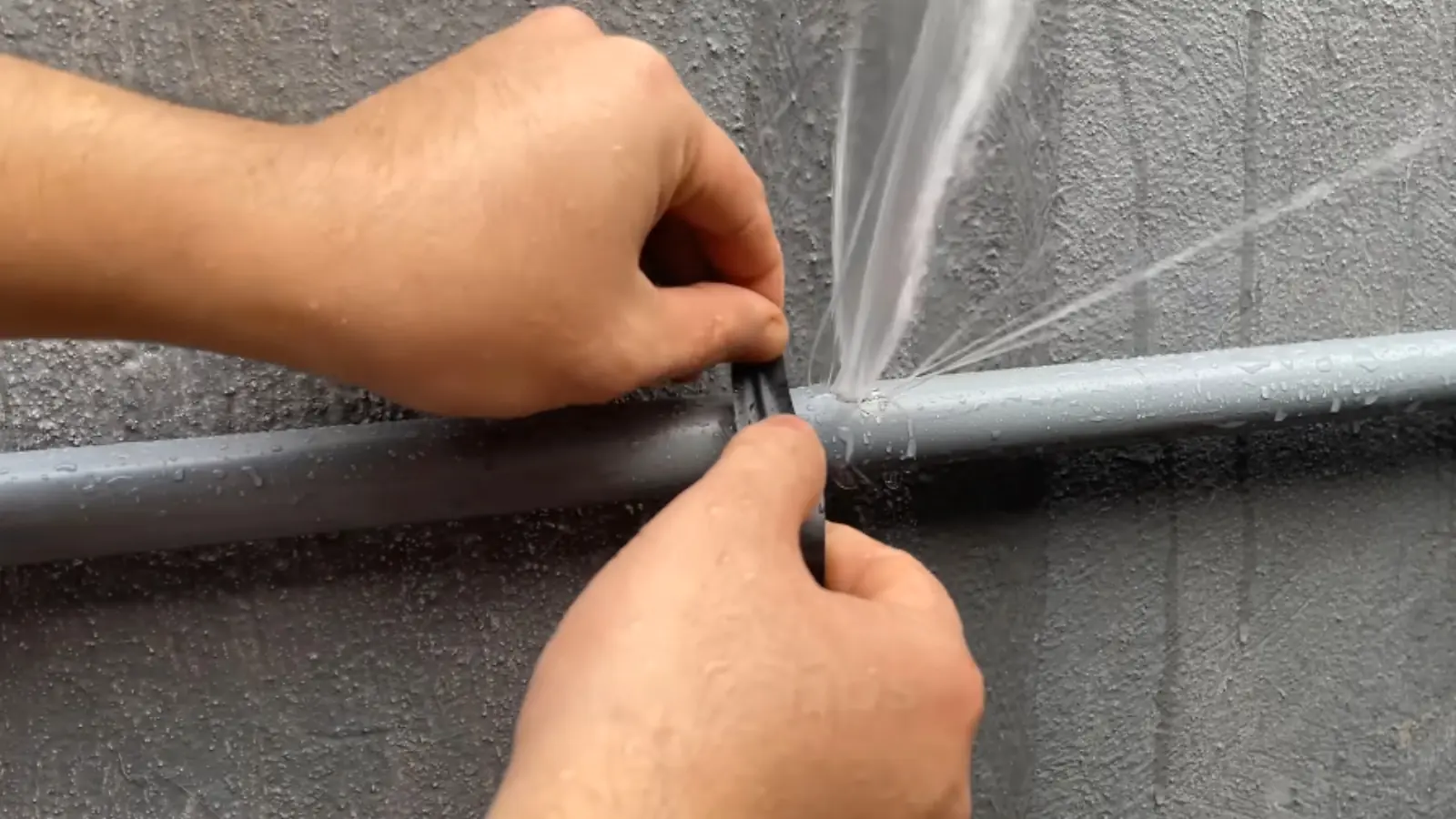
When a burst pipe is an emergency
Water spraying from a pipe, running through a ceiling, or pouring into a crawlspace is an emergency. So is a pipe that has stopped leaking only because you shut the main, because the house now has no water. Slow drips from a fitting can wait for a scheduled visit, but a fast loss cannot, and wet drywall starts to sag and grow mold quickly.
Night and weekend calls are normal for this work, because pipes tend to fail during cold snaps and holidays when the house is full of people. Our 24/7 line connects you to a dispatcher who asks the right questions. We do not quote an arrival time, but we do tell you the price structure before anyone starts.
- Close the main. Turn the main water valve clockwise. A lever handle closes with a quarter turn. If it will not move, do not hit it or force it with a pipe wrench, because a broken valve makes things worse.
- Open a low faucet. Run the lowest tap in the house, and an outside spigot, to drain the pressure still in the pipes.
- Kill power if the area is wet. Only if you can reach the breaker panel without stepping through water. If not, stay out and call.
- Turn off the water heater. Switch an electric heater off at the breaker, or set a gas unit to pilot, so it does not run dry. Do not touch gas fittings.
While you wait: contain
Put buckets under drips, push standing water toward a drain, and lift rugs and boxes off the floor.
While you wait: photograph
Take dated photos and short videos of the pipe, the water and every damaged surface before cleanup starts.
While you wait: clear access
Move storage away from the pipe, open the crawlspace hatch, and make sure a flashlight is handy.
While you wait: be ready to describe it
Tell us the pipe color, the size, where it is and whether water is still running. That helps us bring the right parts.
What breaks, and why it happens here
Pipes fail for a handful of reasons. Cold snaps freeze water inside a line, and the ice expands until a joint pops or the pipe splits along its length. On some winter nights in Western Washington the temperature falls enough to hit exposed outdoor faucets and unheated crawlspace pipes. If you know a cold night is coming, drain outdoor lines and open cabinet doors under sinks on exterior walls.
Age and wear cause the rest. Homes from the late 1970s and 1980s often still have original copper or older plastic supply lines, so pinhole leaks, loose fittings and brittle plastic joints appear over time. Mature tree roots can press on buried lines, and shifting soil in a quake can stress a rigid joint. High water pressure, water hammer and poor support add to the wear.
A burst is not always dramatic. Many calls begin with a cracked elbow, a hairline split in a plastic fitting, a fine spray from a small copper line, or a drip in the garage that gets worse. Any of them is worth fixing quickly.
Signs a pipe is cracked or leaking
- A hissing sound or the noise of running water with every tap closed
- Water stains on a ceiling, wall or floor that grow over a day or two
- A sudden drop in water pressure at one or more fixtures
- Wet insulation or soggy soil under the house
- A water meter that moves when nothing is using water
- Green crust or white mineral buildup on a copper joint
If you cannot find the source, our leak detection service uses listening gear, thermal imaging and pressure tests to trace it before any wall is opened. Once the pipe is exposed, the repair itself is straightforward in most homes.
Copper pipe repair: sleeves, couplings or a new section
Copper is the most common supply pipe in older Mill Creek homes, and it can be repaired several ways. For a clean split or a pinhole, we cut out the damaged piece and sweat in a new section with fittings, or use a push-fit or press coupling where that is appropriate. A repair clamp or sleeve can seal a small defect, though it is meant as a short-term solution.
The question is how much of the line is tired. A single freeze split in otherwise sound pipe is a good candidate for a spot fix. Several pinholes along the same run, or green corrosion at multiple joints, suggest the whole run is wearing out, and patching one spot just moves the leak down the line. We tell you which one we are looking at, and you decide.
PEX, CPVC and other plastic supply lines
PEX tubing is flexible, so it often survives a freeze better than copper and can be repaired with crimp, clamp or expansion fittings. A damaged section is cut out and replaced with a coupling, which is quick if there is room to work. PEX does not like long sun exposure or contact with some chemicals, so we check how it is run.
CPVC is stiffer and can turn brittle over time, particularly near hot water. A cracked fitting or a split along a run usually means replacing that section with new pipe and fittings. If more than one spot is cracking, our repiping page explains when replacing the whole line makes more sense than patching.
Some homes built roughly between the late 1970s and mid 1990s used polybutylene supply pipe. We cannot say whether yours has it. If you see gray or blue flexible pipe with crimped fittings, ask a plumber to identify it before it fails.
Galvanized pipe: when a repair works and when it does not
Galvanized steel is rare in Mill Creek because most homes here are newer, but it turns up in some older additions and outbuildings. It corrodes from the inside, so the pipe walls get thin even when the outside looks fine. A repair may hold for a short time, but turning old threads can crack the next section.
We can cut out a failed piece and splice in new pipe with the right adapters, and sometimes that is all it needs. When we see heavy scaling or several soft spots, we say so and explain that a longer replacement will cost more now and less than repeated patching later.
Drain pipe repair and cracked drain lines
A cracked drain pipe leaks differently from a supply line. It drips only when you use the fixture above it, and it may smell. Cast iron and ABS drains in older homes can crack at a joint, split along a seam or sag so water pools. Wet drywall below a bathroom and a damp crawlspace under a toilet are the usual signs.
Drain repairs mean cutting out the bad section and fitting new pipe with proper couplings and slope. If the problem is a clog inside the pipe instead, drain cleaning comes first, and a camera shows whether the pipe itself is damaged. A burst or leaking supply valve at a fixture belongs on our faucet repair page.
Repair options at a glance
| Option | Best when | Trade-off |
|---|---|---|
| Clamp or sleeve | A pinhole or small crack in sound copper, as a short-term fix | Fast and low cost, but not a permanent repair on tired pipe |
| Cut out and replace a section | A freeze split or a single failed joint | Strong and long lasting, needs room to work and some wall access |
| Press, push-fit or crimp coupling | Tight spaces and mixed pipe types | Quick, but needs the pipe to be clean and round |
| Plastic fitting replacement | A cracked CPVC, PVC or ABS joint | Simple fix, but brittle neighboring pipe may crack next |
| Replace the run or repipe | Repeated leaks, galvanized corrosion or old polybutylene | Higher cost and more wall work, but ends the repeated repairs |
What affects the price of a burst pipe repair
Burst pipe jobs range from a ten minute fitting swap to opening a ceiling and replacing a long run. We give a clear price before work starts and explain what is driving it.
Insurance note: sudden damage, like a pipe that bursts, is often covered, while slow leaks that went on for a long time often are not. Read your policy or ask your insurer, and keep your photos and the invoice.
Documenting the damage for insurance or your landlord
Take photos and video before you clean up, and write the time you first saw the water and when you shut the main. Keep any damaged parts of the pipe if we remove them. Ask for an itemized invoice that lists the cause, the location and the repair, because insurers often ask for it.
Renters should tell the landlord or property manager right away, in writing, with photos attached. A property manager can authorize the visit and we can coordinate with the owner and the tenant. Do not throw away wet belongings until the claim paperwork says you can.
A pipe that fails soon after other plumbing work
Sometimes a pipe bursts shortly after another plumbing job, such as a water heater swap. We do not assume the two are connected. Pipes fail on their own timeline, and a recent job is one fact among many. We look at the pipe, the pressure, the age and the fittings and tell you what we find.
Serving Mill Creek and nearby towns
We dispatch to Mill Creek and to nearby towns, including Bothell. If the pipe is in a garage, an attic or a shed, say so on the call. Our licensed plumbers will tell you what we can do on the first visit and what might need a second trip for parts or wall repair.
Burst pipe questions we hear in Mill Creek
How much does burst pipe repair cost?
It depends on the pipe material, how hard it is to reach, how much pipe is damaged and whether it is a late-night call. We give a clear price before work starts. Wall and floor repair is separate.
Do you handle burst pipe repair emergencies at night or on weekends in Mill Creek?
Yes. The 24/7 line takes burst pipe calls at any hour, and we book same-day appointments when available. Shut off the main if it closes, and tell the dispatcher if it does not. We do not promise an arrival time, but we explain the price and plan before we start.
Can you repair a pipe without opening the wall?
Sometimes. If the leak is near an access panel, crawlspace or ceiling void, we can reach it with a small opening. Otherwise a section of drywall must come out. We keep the hole as small as the repair allows.
Can you fix cracked plastic pipe and fittings?
Yes, in most cases. We replace the cracked joint or section with new pipe and the right fittings. If the surrounding plastic is brittle, we may suggest replacing more of the run.
My main valve will not close. What do I do?
Do not force it. Call the 24/7 line, tell us the valve is stuck, and close whatever local shutoffs you can reach, such as the one under a sink or behind a toilet. We may need the water utility to shut off at the meter.
Can a clamp or sleeve be a permanent fix?
It is meant for short-term sealing on sound pipe. If the pipe is corroded or thin, a clamp can fail, so we usually recommend cutting out the bad section.
I rent. Who pays for a burst pipe repair?
That depends on your lease and local rules. Tell the landlord in writing, and they can authorize the visit. We do not do the repair without the owner or manager agreeing to the cost.
Can you repair a burst galvanized pipe?
Often, yes, by cutting out the failed piece and splicing in new pipe. But corroded galvanized can break again beside the repair, so we tell you honestly if a longer replacement makes more sense.