
Signs your pipes are due for replacement
The clearest sign is a second or third leak in the same system within a year or two. Rust-colored water when you first open a tap, low flow at fixtures that used to run well, green stains at copper joints, and pinhole sprays in a wall all point to pipe that is wearing out. One leak does not mean the house needs a repipe, but a pattern does.
Age matters too. Many homes in the original Mill Creek plat were built from 1976 and mostly finished by about 1983. By now, those supply lines are over four decades old, and some have been patched. Older homes may have copper that has thinned inside, early plastic that has turned brittle, or galvanized steel in additions.
- More than one leak on the same line within a couple of years
- Brown or yellow water that does not clear after a minute
- Weak flow at several fixtures, not just one
- Green or white crust on copper joints
- Gray or blue flexible pipe with crimped fittings, which may be polybutylene
When repiping beats patching
Patching is smart when one joint failed and the rest of the pipe is sound. It costs less and takes an hour or two. But each repair on aged pipe is a bet that the next section holds. When you have paid for three patches and the fourth is on the way, a repipe is usually the better value.
A repipe also makes sense before a remodel opens the walls, after a leak in a slab prompts you to reroute lines, or when you find a pipe type with a known failure history. Waiting for a pipe to fail on its own often means water damage on top of the plumbing cost. See our leak detection page if you are still trying to find out where the water is going.
If you are selling, a repipe may help or may not, depending on your buyer. We can tell you what we see in the pipe and let you decide if the work is worth doing now.
Choosing a pipe material
There is no single best pipe. Each material has a place, and the right choice depends on your house, your budget and how you feel about long-term durability. We explain the trade-offs and install what you choose.
| Material | Best when | Trade-offs |
|---|---|---|
| Copper | You want a proven, long-lived pipe and the walls are open | Higher material cost and more labor, and aggressive water can wear it from the inside |
| PEX | You want a flexible pipe that routes through walls with fewer cuts | Cannot sit in long sunlight, and some chemicals damage it |
| CPVC | A smaller budget and straight, accessible runs | Stiff, can get brittle with age, and fittings crack more easily than PEX |
| Galvanized steel | Rarely, and only to match an existing short run | Corrodes from inside, narrows with scale, and is the pipe most often being replaced |
Material cost is only part of the story, because labor, access and restoration usually matter more. For many whole-house jobs, PEX is a practical choice because it bends around framing and needs fewer joints. Copper remains a good choice for owners who want a traditional, long-lasting line.
Polybutylene and other pipes with a history
Polybutylene supply pipe was used in some homes built roughly between the late 1970s and mid 1990s. Some homes in that period have it and some do not, so we cannot say yours does. If you see gray, blue or black flexible pipe with metal crimp rings, ask a plumber to identify it.
Early CPVC and some older fittings have also had problems with brittleness. Replacing them before they fail is a reasonable thing to ask about, and we can show you what we see in your plumbing and give you options.
Whole-house or partial repipe
A whole-house repipe replaces all the hot and cold supply lines from the main shutoff to the fixtures. A partial repipe replaces one branch, such as the kitchen, one bathroom or a leaking riser. Partial is often the right first step when one area keeps failing.
The risk of a partial job is that new pipe connected to old pipe can shift pressure and flow, and the old section may leak next. We tell you what we see before you decide. If most of the system looks tired, a full repipe avoids repeated disruption.
Getting to the pipes: attic, crawlspace and walls
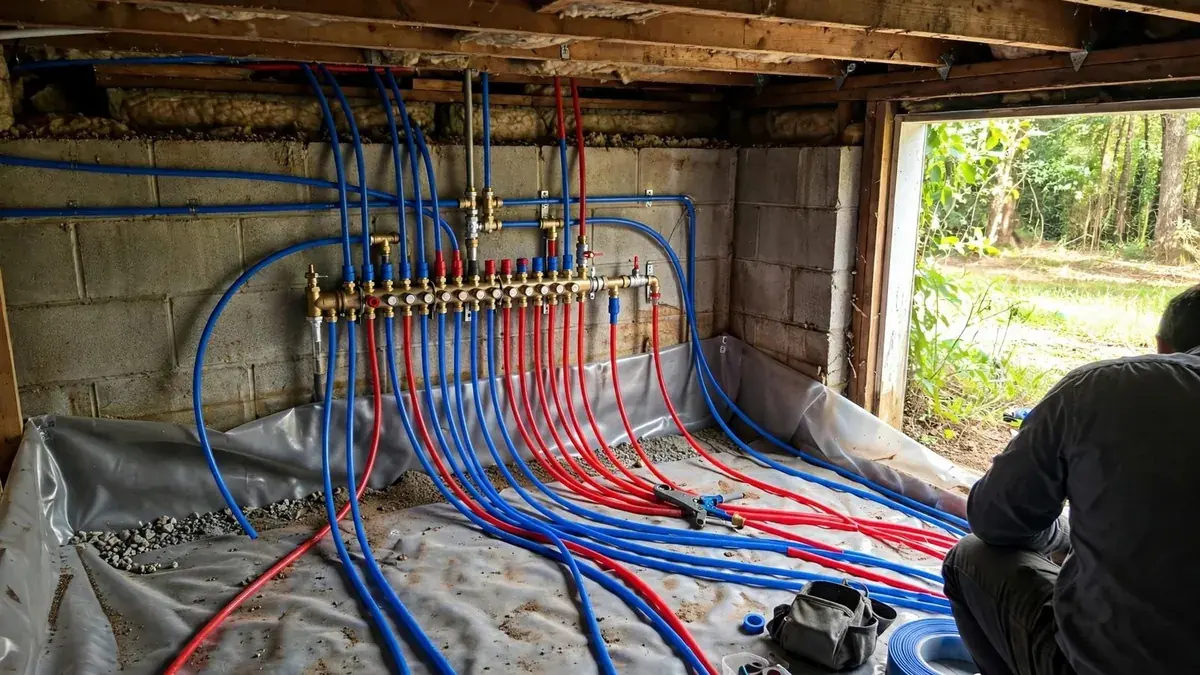
Access decides how much work a repipe is. In a house with a crawlspace, most of the new line can be run underneath with little damage to finished surfaces. Attics are common routes for drops to second floor fixtures. Where pipes sit inside walls, we cut small access holes at each fixture and stub-out and fish the new line through.
Slab homes and tight finished walls make the job harder, because rerouting through the attic may be easier than breaking concrete. We tell you the route before we start and what has to be opened.
Drywall, paint and the honest truth about restoration
Repiping makes holes, and not all of them can be hidden. Expect small access cuts in walls and ceilings, and in some houses a few larger ones. Our crews patch the openings in a way that stops the wall from being a plumbing problem, but a patch is not the same as a finished paint job.
Taping, texture matching and repainting are separate work. Ask us what is included on the price we give you, and plan for a painter or drywall finisher if you want the walls to look untouched. Hiding the work completely is not something we promise.
How long a repipe takes, and living through it
Time varies with the size of the house, the number of bathrooms, the access and the material. A small partial repipe may be done in a day. A whole-house repipe often takes several days. We tell you our estimate when we see your house, but surprises behind a wall can change it.
Most owners stay in the house. Water is shut off for stretches while pipes are cut and connected, and we try to restore it in the evening so you have use of the kitchen and bathroom overnight. Plan on storing some drinking water, moving things away from walls and keeping pets clear of work areas.
Permit rules vary, so ask the building department for your address. We explain what a permit would mean for your timeline when we price the job.
A repipe is a large job under the same state plumbing code, so ask the building department for your address whether a permit and inspection apply. Plan the schedule around that answer.
Cost factors for repiping
What decides the price of a repipe
Repipe prices vary a lot between houses, so we do not quote a flat figure. We look at the home and give you a clear price before work starts.
Insurance note: sudden damage may be covered, but a repipe done because pipes are old is usually not. Read your policy or ask your insurer, and keep your invoice.
Where this fits with other plumbing work
A repipe often pairs with other work. If the water heater is old, a water heater replacement at the same time saves opening the same connections twice. If you are adding a bathroom or moving a kitchen, plumbing installation work can be planned alongside the new supply lines.
We serve Mill Creek and nearby towns, including Bothell. If you are not sure whether you need a repipe, a plumber can look at the pipe and tell you honestly. Sometimes the answer is to patch and keep an eye on it.
Repiping questions from Mill Creek homeowners
How much does repiping cost?
It depends on the size of the house, the pipe material, how easy the pipes are to reach and how much restoration you want. We give a clear price before work starts. Drywall finishing and paint are usually priced separately.
Can I just repipe one section instead of the whole house?
Yes. A partial repipe is a common first step when one area keeps leaking. We tell you if the rest of the system looks tired enough that a full repipe would save you repeated visits.
Which pipe is better, copper or PEX?
Neither is always better. Copper is long-proven and rigid. PEX is flexible and needs fewer fittings, which can mean less wall damage. We explain the trade-offs for your house and install what you choose.
How long will the water be off?
Water is off in stretches while pipes are cut and connected. We aim to restore water at the end of each work day when possible, but we cannot promise that for every job.
Do I have to move out during a repipe?
Most people stay. You will need to plan around short water outages and some dust and noise.
Do you handle emergency calls for a burst pipe?
Yes, the 24/7 line takes burst pipe calls, and our burst pipe page explains what we do. A repipe is a planned job, so we schedule it once the emergency is under control.
My house might have polybutylene. What should I do?
Some homes built roughly between the late 1970s and mid 1990s have it. Ask a plumber to identify the pipe. We look at what you have and tell you your options.
Will you patch the drywall after the repipe?
We patch the openings so the wall is sound, but taping, texture and painting are separate work. Ask what is included in your price.