
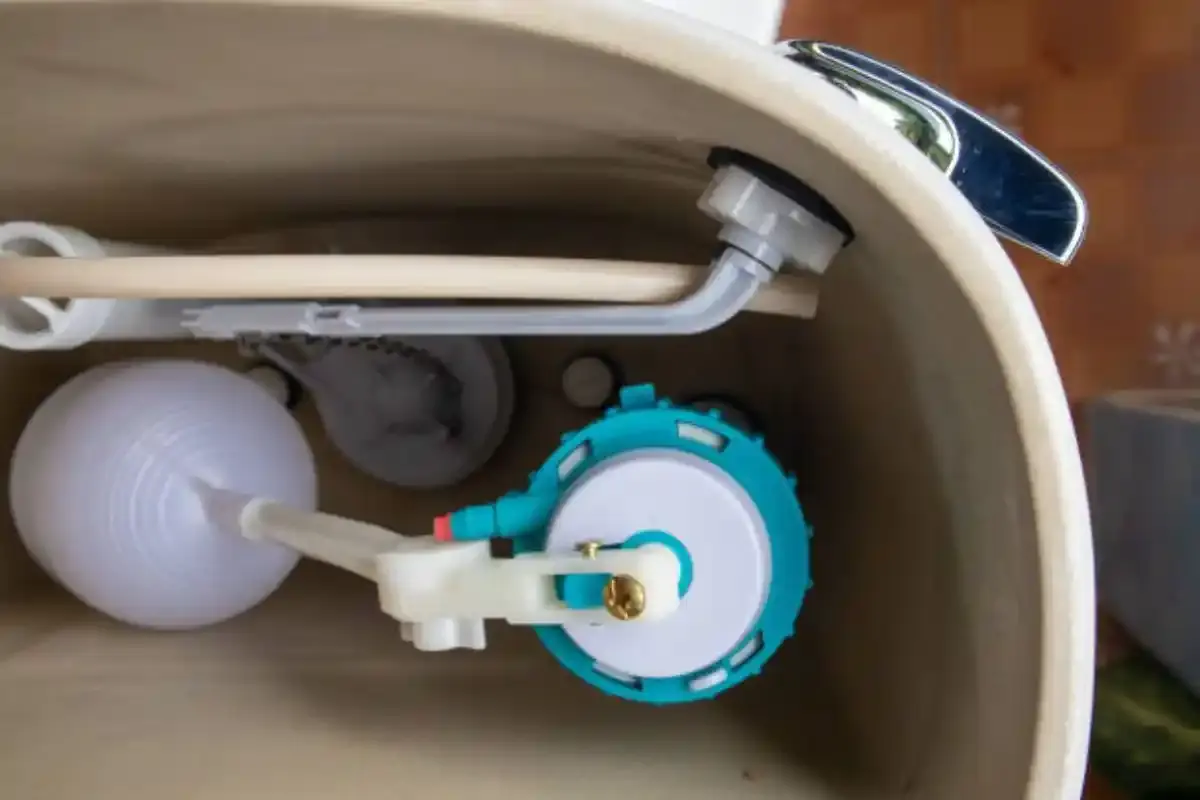
When a toilet leak is an emergency
A toilet that is only running is a nuisance. A toilet that is spilling water onto the floor is a different call. Water spraying from the supply line or valve, a tank that cracked and keeps emptying, a bowl that overflows with every flush, or water coming through the ceiling below a second-floor bathroom all deserve a same-day visit.
Overflow is the one people wait on too long. Water that reaches subfloor and drywall keeps soaking for hours. If the toilet is also gurgling or other drains are slow, the blockage may be past the toilet itself, and the fix belongs under drain cleaning rather than a part swap.
Close the wall valve.
Turn it clockwise until it stops. If it spins loose, drips from the stem or will not move, close the main water valve for the house.
Do not flush again.
Lift the tank lid and push the flapper down if water is still entering the bowl, or hold the float arm up to stop the fill.
Contain the water.
Towels around the base, a bucket under any drip, and rugs lifted out of the way. Keep people off wet floors near outlets.
Note what you saw.
Where the water appeared, whether it was clear or dirty, and how old the toilet is. That helps us bring the right parts on the first trip.
Signs a toilet needs repair, in plain terms
Callers describe the same handful of things. The handle feels loose or hangs down and nothing happens. The tank refills with a hissing sound minutes after a flush. The toilet runs on its own every so often, a phantom refill that no one caused. The base rocks slightly. A damp patch shows up on the floor beside the bowl.
Some signs point at the toilet and some do not. A stain on the ceiling below the bathroom could be the wax ring, a supply line, the shower or the drain, and the fastest way to sort it out is a plumber looking at all of them in one visit.
- Handle is loose, sticks or has to be held down to finish a flush.
- Water level in the tank is low, or water trickles into the bowl all day.
- Water seeps from the base when the toilet is flushed.
- The wall valve or supply line drips, even slowly.
- A hairline crack runs through the bowl or tank, or there is a damp ring on the floor.
- The toilet rocks when you sit, even a little.
Running toilets and high water bills
A running toilet is one of the quietest ways to waste water. A flapper that does not seat fully can pass a steady thin stream into the bowl, day and night, and the household never hears it. Homes with two or three bathrooms sometimes have more than one toilet running at random, which is how a bill jumps without any visible leak.
To test it yourself, put a few drops of food coloring in the tank and wait about 15 minutes without flushing. Color in the bowl means the flapper or fill valve is leaking. If the water meter still turns with every fixture off and the toilets pass the dye test, the loss is somewhere else, and leak detection is the next step.
Why toilets fail in Mill Creek homes
Much of the original Mill Creek plat east of Bothell-Everett Highway was built between 1976 and about 1983. Toilets from that era have often been replaced once, but the old chrome supply lines, multi-turn shutoff valves and the brass bolts holding the bowl down are frequently original. A shutoff that has not moved in thirty years may refuse to close when you finally need it, so test yours.
Newer areas around Town Center, East Gateway and The Farm at Mill Creek have newer fixtures, with flexible braided supply lines and quarter-turn valves. Those fail differently: a plastic nut cross-threaded during a quick install, or a fill valve with a worn seal. Either way, a toilet older than about ten to fifteen years is cheaper to repair than it is to keep ignoring.
How we find the cause
We start with the water. Is it clean supply water, or is it from the drain side? Clean water points to the fill valve, tank bolts, supply line or shutoff. Dirty water on the floor points to the wax ring or flange. We check how the toilet sits, whether it rocks, and whether the closet flange is level and solid to the floor.
Then we run the toilet through a cycle with the tank lid off. We watch the flapper seat, listen to the fill valve and measure the water level against the overflow tube. A dye test finds silent leaks. If the bowl will not clear properly, we use a closet auger first, and a drain camera only when the blockage looks deeper than the toilet.
Fill valve and supply valve failure
The fill valve is the part inside the tank that refills it after each flush. When it fails, you get a whistle, a tank that never shuts off or a tank that fills slowly. Replacing one is a routine job when the old unit comes off cleanly. When a corroded nut or plastic shank will not budge, forcing it can crack the tank, which is why a stuck part is a fair reason to call.
The supply valve is the small shutoff on the wall. A failing one drips at the stem, sprays when touched or will not close at all, which makes every later repair harder. Replacing it means shutting off water to the house, so it is also the moment to fit a new braided supply line. If water is spraying and nothing will shut it off, see faucet and fixture repair for the broader valve picture.
Wax ring, flange and a toilet that leaks at the base
The wax ring is the seal between the toilet and the drain flange. When it fails, water seeps out at the base each time you flush, stains the floor and slowly rots the subfloor. A toilet that rocks, even a little, is usually what loosens the seal in the first place.
Replacing the ring means lifting the toilet, cleaning the flange and setting the toilet back on a fresh seal. The real question is the flange underneath. If it is cracked, corroded or sitting below the finished floor after a tile job, a new ring will not hold and the flange needs repair. We tell you which it is before we start.
Cracked bowl or tank
A crack in porcelain does not heal. A hairline in the tank that weeps is sometimes patched in the short term, but a bowl crack below the water line usually means replacement. If water is draining from the tank to the floor, close the wall valve and stay off the toilet until we look at it. Do not sit on a cracked bowl, because it can split further under weight.
Toilet installation and replacement
A new toilet is the right call when the porcelain is cracked, the repair parts cost nearly what a new unit does or the model wastes water on every flush. Installs include setting the new fixture on a fresh seal, connecting a new supply line, checking the flange and testing for leaks and rocking. Bring the roughing-in measurement if you can: the distance from the wall to the bolts. It decides which models fit.
Many owners want to change round bowls to elongated ones across several bathrooms. It is usually straightforward, but an elongated bowl sticks out a couple of inches farther, so check door swing, vanity clearance and the space in front. Ask the dispatcher whether haul-away of the old toilets is included in your job, because that is something people forget until the old unit is sitting in the hall.
If you are remodeling and moving a toilet to a new spot, that is a drain and vent change, not a simple swap. It belongs under plumbing installation, and permit rules vary, so ask the building department for your address.
Repair or replace: a quick comparison
| Problem | Usual repair | Trade-off |
|---|---|---|
| Runs on and off | New flapper or fill valve | Cheap and quick, but a worn toilet may need the next part within a year or two. |
| Leaks at the base | New wax ring, check flange | Easy if the flange is sound. Rotted subfloor adds repair work. |
| Wall valve drips or will not close | Replace valve and supply line | Needs the house water off. Old valves can break while being turned. |
| Cracked tank or bowl | Replace the toilet | Repair is rarely lasting. New unit means choosing a model and checking fit. |
| Weak flush | Clean rim jets, adjust fill, clear the trap | Fixes most low-flow complaints. A very old model may stay weak. |
| Repeated clogs | Closet auger, camera if needed | If other drains slow too, the problem is farther down the line. |
Washlet-style seats and premium toilets
People ask about heated bidet seats and high-end one-piece toilets with built-in electronics. We can often install a seat that comes with its own water and power connection, and we can look at a standard toilet from a premium brand. Repairs to the electronic parts inside a particular model are different, because some need manufacturer parts. Ask the dispatcher about your specific model before booking, so you get an honest answer rather than a hopeful one.
When the toilet is backing up
A toilet that will not flush, gurgles after another fixture runs or sends water up in the tub is telling you the trouble is in the drain. A closet auger clears a plug in the toilet's own trap. If the sink or shower nearby gurgles too, the blockage is farther down and needs a cable machine, which is a drain cleaning job.
If waste is rising in the lowest fixture of the house, stop all water use and call right away, because that points to the main sewer. See sewer line cleaning for that case.
What affects the price of a toilet job
How toilet repair is priced
You get a clear price before work starts. These are the things that move it up or down.
Sudden water damage from a failed supply line is often covered by homeowners insurance, while a slow leak at the base often is not, so read your policy or ask your insurer before cleanup.
Before we arrive and what we cannot promise
Clear the floor around the toilet so we can reach the wall valve, and keep pets and children out of the bathroom. Take a photo of the toilet's tag inside the tank if you can read it, since it identifies the model. Tell us if the home is a rental, because contact details for the owner or property manager speed up approval.
We cannot promise to match every vintage or imported toilet exactly, and some older models are not worth repairing. We also cannot see through a floor, so a rotted subfloor is found, not guessed at. We also dispatch to nearby towns such as Bothell, and the 24/7 line is open whenever the problem happens.
Toilet repair questions we hear most
How is toilet repair priced?
You get a clear price before work starts. It is built from the trip, the time of day, the parts and any extra work like a rotted floor or a stuck valve. We do not quote by phone for jobs that depend on what is under the toilet, but the dispatcher can explain how the price is built.
Do you handle toilet repair emergencies at night or on weekends in Mill Creek?
Yes. The 24/7 line takes calls any hour, and same-day appointments are offered when available. Overflowing bowls, sprayed supply valves and cracked tanks are treated as urgent. We cannot promise an arrival time, but we tell you what to do while you wait, starting with the wall valve.
Can you replace my toilet the same day?
Often yes when we have a suitable unit or you have already bought one. Same-day depends on the schedule and whether the flange and floor are in good shape. If you are choosing a model, ask the dispatcher about the roughing-in measurement first.
Will you take away the old toilet?
Ask when you book. Haul-away is something worth confirming up front, especially if you are replacing toilets in several bathrooms, so there is no surprise on the day.
Can you fix a toilet that rocks or leaks at the base?
Usually yes. That is typically a wax ring and sometimes shims or a flange repair. Partly no: if the subfloor has softened from long seepage, the floor needs repair before the toilet is set back, and we will tell you before we start.
My landlord owns the home. Can I call you?
Yes, but someone has to authorize the work. Tell the dispatcher whether you are the tenant or owner. If it is an emergency, shutting off the wall valve and calling us is fine, and the owner or manager can confirm the work by phone.
My water bill went up. Could a toilet be the cause?
Very possibly. A silent flapper leak can waste a surprising amount over a month. Try the dye test, and if the meter keeps moving with everything off, we can check with leak detection.
Can you install a heated bidet seat?
Often, if the toilet and outlet suit it. Ask the dispatcher about the specific model so we can say honestly what we can and cannot do.