
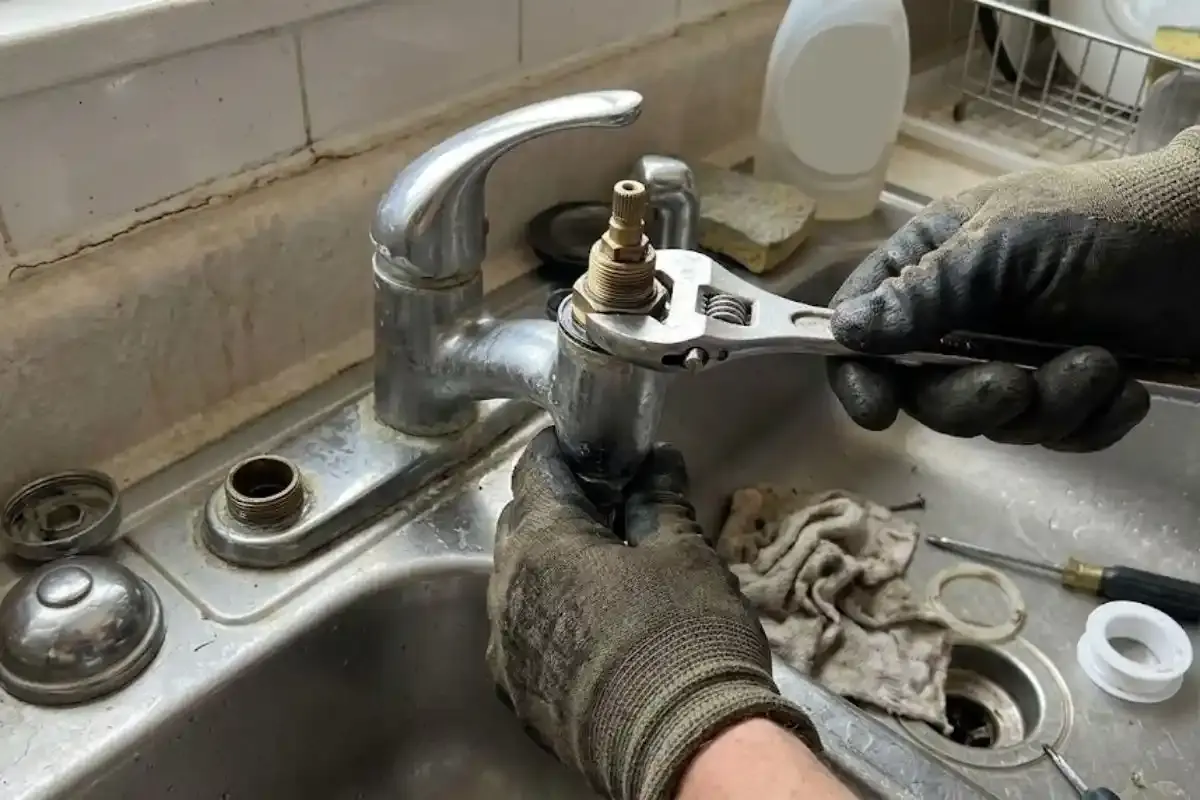
The test we use to decide
Ask three questions before you pick up a tool. Can I shut the water off to just this fixture? If the fix fails, is the worst result a wet floor and not a flood, a fire, a gas leak or sewage? And do I know what I will do if the part is not the one I expected?
If all three answers are yes, you are probably fine. If any answer is no, stop and call. A plumber costs less than a ceiling, and most repairs that go badly started as a Saturday project that kept growing.
Decision table: DIY, careful DIY, or call
| Job | Verdict | Why |
|---|---|---|
| Clean a faucet aerator | DIY | Unscrew, rinse out grit, reinstall. Nothing to break. |
| Plunge a toilet or sink | DIY | Use a plunger only. No chemicals. |
| Replace a toilet flapper or fill valve | DIY | Close the stop valve first. Parts are standard. |
| Replace a supply hose | Careful DIY | Water off at the stop valve. A cracked stop valve means call. |
| Replace a faucet | Careful DIY | Corroded stop valves can fail when disturbed. |
| Small drain clog with a hand auger | Careful DIY | Fine for a sink trap or tub. Stop if it keeps returning. |
| Repeated clog in several fixtures | Call | Points to the main line, not a fixture. |
| Water heater element, thermostat or gas valve | Call | 240 volt power or gas. Not a homeowner job. |
| Sewer smell, sewage backup, root problem | Call | Biohazard and camera or jetting equipment needed. |
| Any pipe inside a wall or ceiling | Call | Cutting blind causes bigger damage. |
| Main shutoff that will not close | Call | Forcing it can break it. |
| Gas line or appliance connection | Call | Leave the building first, then call 911 or the gas utility. |
Jobs that are genuinely safe to do yourself
A gurgling slow sink with hair in the trap is a good first job. Put a bucket under the trap, unscrew the slip nuts by hand, clean it, and reassemble with the washers seated flat. It takes about twenty minutes and a bucket.
A weak faucet stream is often just a clogged aerator. Unscrew it from the spout tip, soak it, and brush the screen. If you want a pro for the faucet itself, see our faucet repair page. For toilets, the parts inside the tank cost little and come in standard sizes.
- Plunge with a proper flange plunger, not a cup plunger, on toilets.
- Use a hand auger on a sink trap or tub drain, and stop if it hits a solid stop.
- Replace washers, aerators and flappers with the exact size parts.
- Test every connection by running water and wiping with dry paper.
Jobs where DIY gets risky fast
Old stop valves are the usual trap. They sit unused for decades, then fail the moment you turn them. If a stop valve drips from the stem or will not close fully, do not keep tightening. Shut the main off and call.
Chemical drain cleaners are another one. They can burn skin, damage pipes, and leave dangerous standing liquid for whoever opens the trap next. They also make a later snaking unsafe. Never use them together with a snake, and never mix products.
Never do these yourself
Do not open a tankless water heater's internal wiring. Do not rewire or reset a 240 volt water heater circuit. Do not try to relight a gas appliance if you smell gas. Leave the building, then call 911 or the gas utility before calling us.
Do not wade into a flooded basement if water may be touching outlets or appliances. Turn off power at the panel only if you can reach it dry.
Signs a small job has become a plumber's job
Several fixtures acting up at once is the biggest sign. A tub that gurgles when the washer drains, or a toilet that bubbles when you run a sink, usually means a main line problem. A hand auger will not fix that, and a drain cleaning visit with a cable machine or camera will.
Other red flags include a water bill that jumps without any change in use, a damp spot that returns after you dry it, a stain that grows on drywall, rust coloured water, and any repair that takes more than one try. A fix that fails twice is a diagnosis problem, not a tools problem.
- Two or more drains slow at the same time.
- Sewage smell or water coming up in a floor drain.
- Rust, green crust or drips on valves and fittings.
- A damp wall, ceiling or floor you cannot trace.
- Hot water that runs out far quicker than it used to.
Checking who you hire
Washington's Department of Labor and Industries offers a public tool called Verify a Contractor, Tradesperson, or Business. It shows whether a contractor is registered and whether a registration is suspended, along with the bond and insurance information on file. It is a good habit before anyone opens a wall or touches your water heater. Our crews are licensed plumbers, and you should ask any company the same questions.
Ask for a clear price before work starts and what happens if the job turns out different from the first look. Permit rules vary, so ask the building department for your address if you are unsure whether your work needs one.
Mill Creek houses and DIY limits
Homes in the original plat were built from 1976 through the early 1980s, so many have original supply stops and valves that have rarely moved. Some homes of this era also have polybutylene supply pipe. We cannot tell you whether yours does. Ask a plumber to identify the pipe before you start cutting into it.
Mature trees on neighbourhood lots mean that older sewer laterals are worth a look when drains slow repeatedly. That is camera work, not a plunger job. We also serve nearby towns, including Bothell, and the same sorting rules apply there.
DIY plumbing questions
Is it safe to unclog a toilet myself?
Yes, with a flange plunger and steady pressure. Do not pour hot water in a cracked-looking bowl and do not use chemicals. If water rises toward the rim, close the stop valve behind the toilet and call if it keeps backing up.
Can I replace a faucet myself?
Often yes, if the stop valves under the sink close fully and you have basin wrench access. If the stop valves leak or will not turn, stop and call, because the repair then includes the valves.
What plumbing jobs should never be DIY?
Gas lines, 240 volt water heater wiring, tankless internals, sewer lines, and any pipe inside a wall. Also any shutoff that will not close.
Will a plumber charge a lot just to look?
Pricing depends on the visit, the access and the diagnosis time. We state a clear price before work starts, and the call to describe your problem is the first step.
Should a Mill Creek homeowner call before trying a repair on an older house?
Yes, if the house is from the 1970s or early 1980s and the repair involves old stop valves, supply pipe or a water heater. Older fittings break in ways new ones do not.