
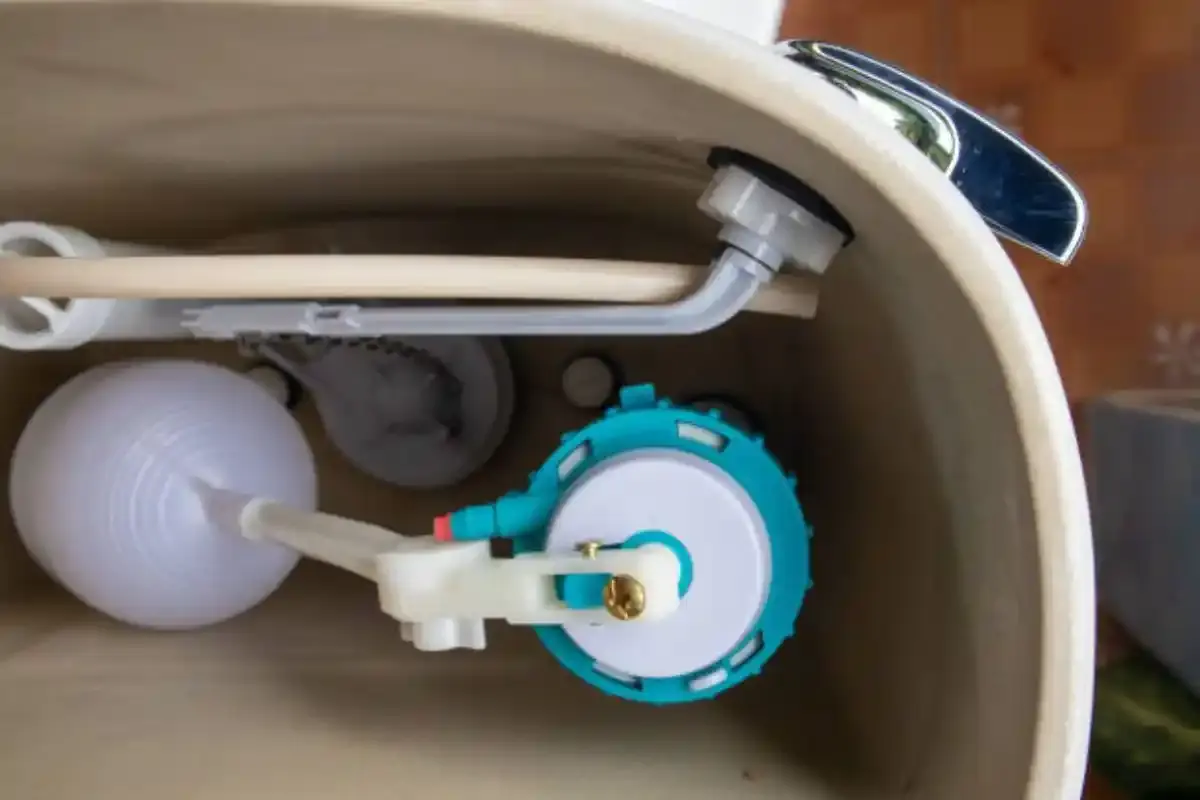
First, stop the flush and look at the bowl
If the water is rising, do not flush again. Lift the tank lid, push the flapper down to hold it shut, or turn the small valve behind the toilet clockwise to stop the refill. Then see where the level settles. A bowl that stays full but steady is easy to work with. A bowl that keeps creeping toward the rim is not.
Put towels down and lay old newspaper on the floor around the base. Keep kids and pets out of the room. Wear rubber gloves, since toilet water carries bacteria, and open a window if the bathroom has one.
What you need
- A flange-type plunger (it has a rubber fold-out sleeve that seals the toilet drain). A flat cup plunger made for sinks does not seal well.
- A closet auger, also called a toilet snake, with a protective sleeve so the cable does not scratch the bowl.
- Rubber gloves, old towels and a bucket.
- A few gallons of very hot water from the tap. About the temperature of a hot shower, not boiling.
- A little dish soap, which lubricates a soft clog.
Plunger first, every time
- Check the water level. You need enough water to cover the plunger cup. If the bowl is nearly empty, add a bit of water from a bucket.
- Seat the plunger. Press the flange sleeve into the drain opening so the cup seals around it. Tilt slightly to let air escape.
- Push gently, then pull hard. The first push forces any trapped air out. The strong pull draws the clog back up. Repeat for about fifteen to twenty strokes.
- Break the seal and watch. If the water swirls down, flush once to test. If it stays high, repeat the plunging a second round.
- Stop after three honest rounds. More effort rarely fixes a clog that three rounds did not, and aggressive plunging can slop sewage over the rim.
Where hot water fits in
A soft clog made of toilet paper and waste can loosen when you add a squirt of dish soap and a few quarts of very hot tap water. Pour from waist height into the bowl, slowly, and wait fifteen minutes. The warm soapy water softens the mass so the plunger can shift it.
Never use boiling water. A sudden jump in temperature can crack porcelain, and a cracked bowl needs replacing. Also skip the old advice about adding a cup of boiling water straight from the kettle. Hot tap water does the useful work with none of the risk.
Hot water does nothing for a hard object. A toy, a toothbrush, or a wad of wipes will not dissolve. If you suspect something solid went down, move to the closet auger, or stop and call.
Using a closet auger
A closet auger is short, with a curved tip made to turn the toilet's trap. Feed the tip into the bowl opening, crank the handle clockwise, and push gently until you feel resistance. Keep cranking as you push to hook or break up the clog, then pull the cable back and flush once.
Go slowly and keep the sleeve against the porcelain. Do not force a cable that suddenly stops hard, since it may be against a bend or a stuck object. Never run a drain-cleaning chemical into a toilet before using an auger. The splash is caustic, and it can burn skin and eyes.
Common mistakes that make it worse
| Mistake | What goes wrong | Better choice |
|---|---|---|
| Flushing repeatedly | The bowl overflows onto the floor | Hold the flapper and wait |
| Pouring in boiling water | The porcelain can crack | Use hot tap water only |
| Using a sink plunger | No seal, so no suction | Buy a flange-type plunger |
| Pouring chemical cleaner then plunging | Splashback burns skin | Skip the chemical and use a plunger or auger |
| Flushing wipes labelled flushable | They bunch into a mass in the line | Bin them |
| Ignoring a second fixture | Misses a main line backup | Check the tub and sink drains |
When it is the main line: stop and call
If you flush and water or gurgling shows up in a tub, shower or floor drain, the toilet is not the problem. Several fixtures backing up at once means the main sewer line is blocked, and plunging will not reach it. Stop using water in the house and call the 24/7 line.
Also call when the plunger and auger both fail, when water rises at the rim after every flush, or when a toilet clogs again within days. A repeat clog can mean a partly blocked line, a loose wax ring, or an object lodged in the trap. A toilet repair visit can pull the toilet and clear the trap directly. For the line itself, drain cleaning with a cable machine or camera finds what is below the floor.
Toilet or line backing up?
Call the 24/7 line. We take same-day appointments when available and explain the price before work starts.
Clogged toilets in Mill Creek homes
Homes in the original Mill Creek plat, built from 1976 into the early 1980s, often have older toilets with a larger tank and slower flush than newer models, and older drain pipes with rougher walls. A toilet that clogs every few weeks in a home like that may be a pipe issue as much as a toilet issue.
Mature trees on many lots here also make root intrusion in the sewer lateral worth asking about if the whole house is slow after a wet spring. We dispatch to Bothell and nearby towns as well, and the same main line signs apply.
Clogged toilet questions
Is it safe to pour hot water into a clogged toilet?
Hot tap water is fine, poured slowly. Boiling water can crack the bowl, so avoid it.
How long should I wait after adding hot water and dish soap?
About fifteen minutes is enough for a soft clog to loosen. Then use the plunger. If nothing changes after that, move on to an auger.
Why does my toilet clog so often?
Usually too much paper or wipes, a low-flow toilet in an older line, or a partial blockage further down. If it clogs more than a couple of times a month, have it looked at.
Can a clogged toilet damage my floor?
Yes, if it overflows for long. Shut the supply valve behind the toilet, mop up quickly, and let any wet subfloor dry.
What if every drain in my Mill Creek house is backing up?
That points to the main line, not the toilet. Stop running water and call the 24/7 line. We can clear it with a cable or jetter and run a camera to find the cause.